
Jaudi RemOps
Operations Portal (Web Admin) - Lead Product Designer
Overview and role
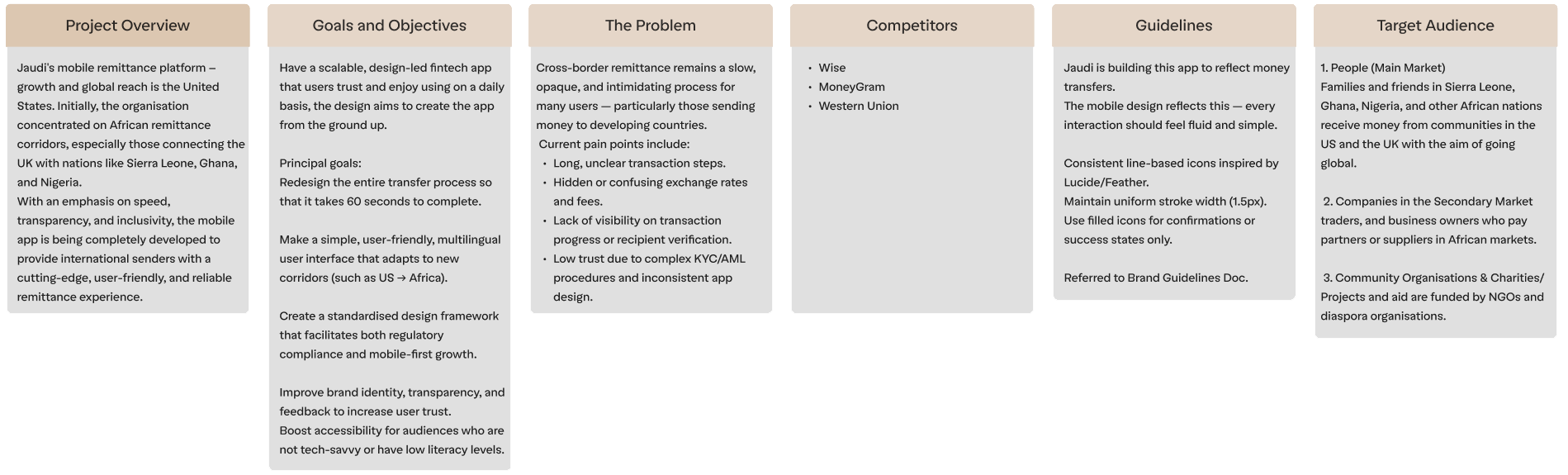
RemOps is the operations platform behind Jaudi's remittance app. Every transfer a customer sends starts a chain of back-office work: confirming the pay-in, screening sender and payee against KYC, sanctions and PEP rules, locking the rate and fee, routing the payout, then settling and reconciling it. That work was running on an internal system and manual checks that wouldn't scale with the app. RemOps is used by:
Operations, compliance and finance teams who screen, route, pay out and reconcile every transfer the app creates.
Platform admins who configure the corridors, payment providers, FX rates and fees the app depends on.
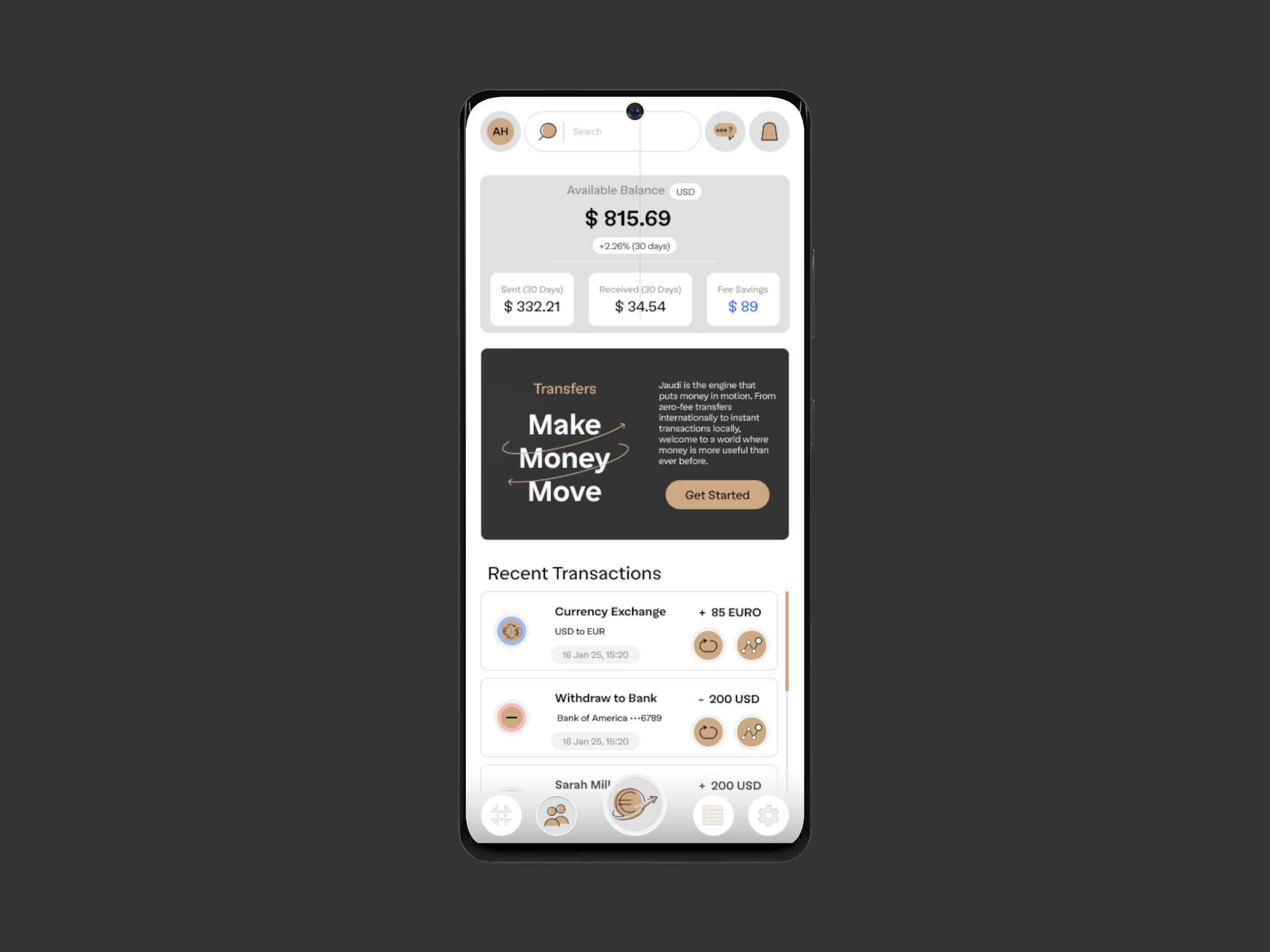
I designed RemOps alongside the consumer app as its operational counterpart. Every state a transfer can reach in the app has a screen where operations, compliance and finance can monitor it, step in and audit it, and every configuration the app relies on is set up here. Both were designed to launch together, so no transfer a customer makes goes unmanaged.

“Every transfer the app creates needs a screen where someone can monitor it, step in and audit it.”
The brief was to replace an internal system and manual checks with one portal that could scale with the app, without losing control or compliance. We designed around four constraints:
Built in parallel with the customer app, so every app feature needed a matching way to set it up and monitor it.
Several payment providers per corridor, each with its own costs, rails and settlement cycle.
UK regulation: KYC levels, periodic reviews and a complete audit trail for every transfer (MLR 2017, FCA SYSC 6.3, JMLSG).
Four teams in one portal: operations, compliance, finance and platform admins.
The design started from the system the team already used, not a blank page: stakeholder working sessions, screen-by-screen walkthroughs of the existing tool, and a map of every state a transfer passes through, and who owns it, before any screen was drawn.
What we set out to build
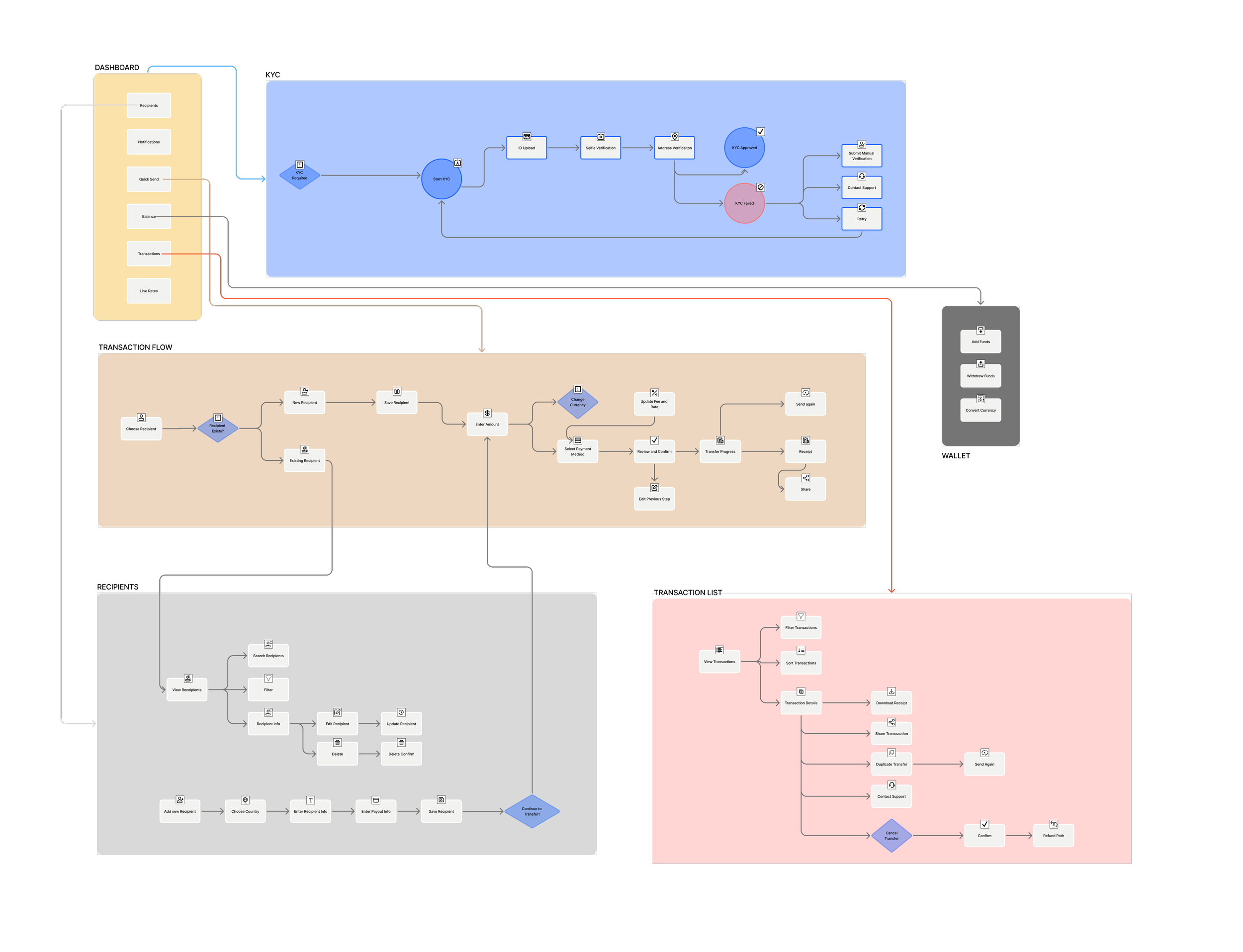
RemOps follows a transfer from the moment the app creates it to the moment the money is reconciled. Fifteen modules are grouped by the stage they serve: pay-in, screening, rate and fee, payout, and settle and reconcile. Underneath sits the setup the app depends on (corridors, providers, FX, pricing), with oversight across the whole flow and one audit trail for every action.
Key decision 01 · Corridors
Launch a corridor in four guided steps
Taking a new country live used to mean configuring the currency pair, margins and payout providers in separate places. The Add corridor wizard puts them in order: Currency pair, Rate margin, PSP route, then Publish. The draft saves automatically, and nothing goes live until someone publishes.
The PSP route step decides the fallback provider at setup, not during an outage, and a live preview walks from the XE mid-market rate to the exact customer rate.
Key decision 02 · Transfers
One page per transfer, with its full history
Every transfer has a single page: payer, payee and both payment providers next to what was sent and received, a seven-step lifecycle from Pending to Completed, and tabs for parties, financials, risk and compliance, and the audit trail.
Every decision opens a confirmation that leads with the facts, and Approve stays disabled until the officer confirms they checked the match.
Key decision 03 · Payouts
Pay out with a checklist, not from memory
Cash pick-up is where money physically leaves the business, so the payout drawer turns the branch process into a checklist: verify ID, match the name, check the phone number, confirm funds and collect a signature.
Complete payout only unlocks once every check is done, the exact amount to hand over is always on screen, and every payout is written to the transfer's audit trail.
Key decision 04 · Reconciliation
Reconciliation that only asks for what needs a person
Card and open-banking payments match themselves, so the screen leads with what needs attention: exceptions to investigate, and manual bank transfers waiting to be confirmed against a pay-in, each with a confidence level.
Four tabs cover transfer matching, PSP periods, bank statements and client money, with PSP and bank status side by side and any variance highlighted.
From initial design to final design
The first round of designs next to the final versions built on the Jaudi design system.
Dashboard. The heavy brown section headers are gone so the numbers come first. KPI cards now carry sparklines and trend badges, and the product sits in the sidebar header.
Transfer detail. Route, amounts and parties fit one row above the fold, the lifecycle has numbered steps with a clear current state, and the audit trail reads as a timeline.

The Marketplace, on the same system
Jaudi's next product is a marketplace for electronics, fashion, home and sport, opened from RemOps through the product switcher. I reworked the storefront from its first Figma draft on the same design system, so it shares the tokens, components and tone of the console and the app.
It covers browsing and filters, product options, cart, delivery, payment (card or cash on delivery) and accounts, with nothing built only for this product.
15
Modules in one portal
7
Lifecycle stages per transfer
4
Reconciliation views
One design system, two products
The customer and the operator look at the same transfer from opposite sides, so it should read the same way on both. RemOps is built from the same components as the consumer app, adapted for a desktop workload rather than redrawn.
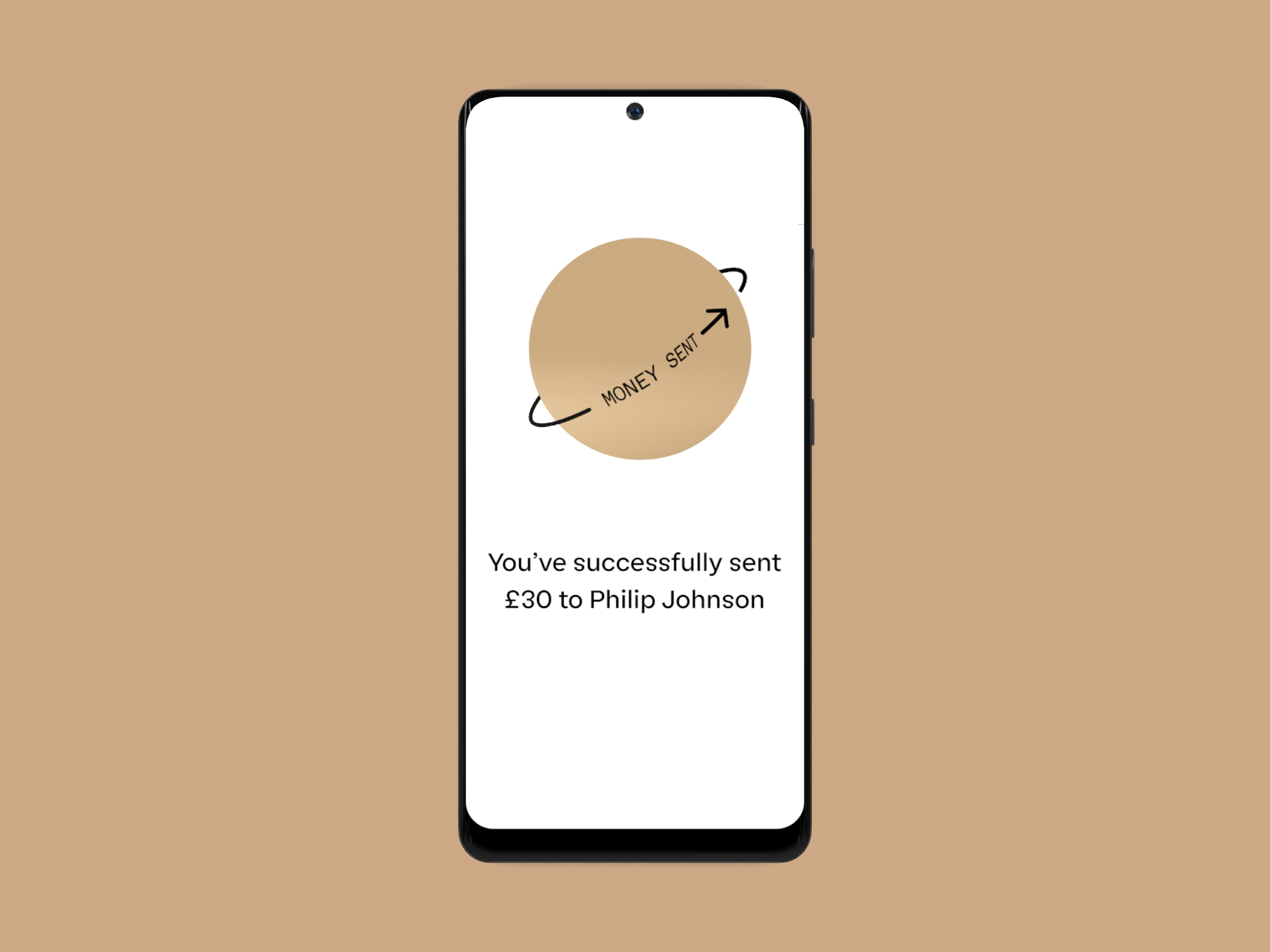
The status tracker shows the customer where their money is and the operator the same lifecycle with internal steps added. The brown summary card is the same on the receipt, the transfer page and the payout drawer, and blue-40 always means money is moving the right way.
What's next
Bring Wallets, Assets and Payments into the same shell, each behind the product switcher.
Take the Marketplace from prototype to build, starting with seller onboarding and order operations inside RemOps.
RemOps and the app were designed as one product seen from two sides: the customer sends money in under 60 seconds, and the team behind it can see, act on and audit every step.